
Ninnaji Temple: A UNESCO World Heritage Site with Japan's Most Unique Late-Blooming Cherry Blossoms

 kote2
kote2 The Verdict
Ninnaji Temple is an absolute must-visit for anyone seeking authentic imperial history combined with stunning seasonal beauty. As a UNESCO World Heritage Site and the head temple of the Omuro school of Shingon Buddhism, this temple offers a rare glimpse into Japan’s aristocratic past. The famous Omuro cherry blossoms—late-blooming dwarf varieties that allow you to view the flowers at eye level—create an unforgettable spectacle against the backdrop of the five-story pagoda. With its spacious grounds, elegant gardens, and national treasure buildings, Ninnaji provides a more serene experience compared to other crowded Kyoto temples.
Tourist Quick Check
| Category | Details |
|---|---|
| Payment | Cash and Card Accepted |
| English Support | Limited (Signage available) |
| Reservation | Walk-in (No reservation needed) |
| Wait Time | Minimal (except during cherry blossom season) |
| Wi-Fi | Unavailable |
Why Locals Love It
Ninnaji Temple holds a special place in Japanese history as a temple founded by Emperor Koko in 888 AD and completed by Emperor Uda. What makes it truly unique is that Emperor Uda himself became a Buddhist priest here after abdicating the throne, establishing a tradition of imperial family members serving as head priests that continued until the end of the Edo period. This makes Ninnaji one of Japan’s most prestigious “monzeki” temples—those with imperial connections.
The temple’s most famous feature is the Omuro cherry trees (Omuro-zakura), which bloom about two weeks later than typical Yoshino cherry trees. These dwarf cherry trees, standing only 2-3 meters tall, allow visitors to appreciate the delicate blossoms at eye level—a truly intimate experience you won’t find at other cherry blossom spots. The sight of these low-hanging blossoms framing the five-story pagoda is considered one of Kyoto’s most photogenic scenes.
The current buildings, including the National Treasure Kondo (Golden Hall) and the five-story pagoda, were reconstructed during the Edo period and showcase exquisite architectural craftsmanship. The temple’s Omuro school of ikebana (flower arrangement) has been passed down through generations, and the meticulously maintained gardens reflect this aesthetic tradition.
Key Highlights
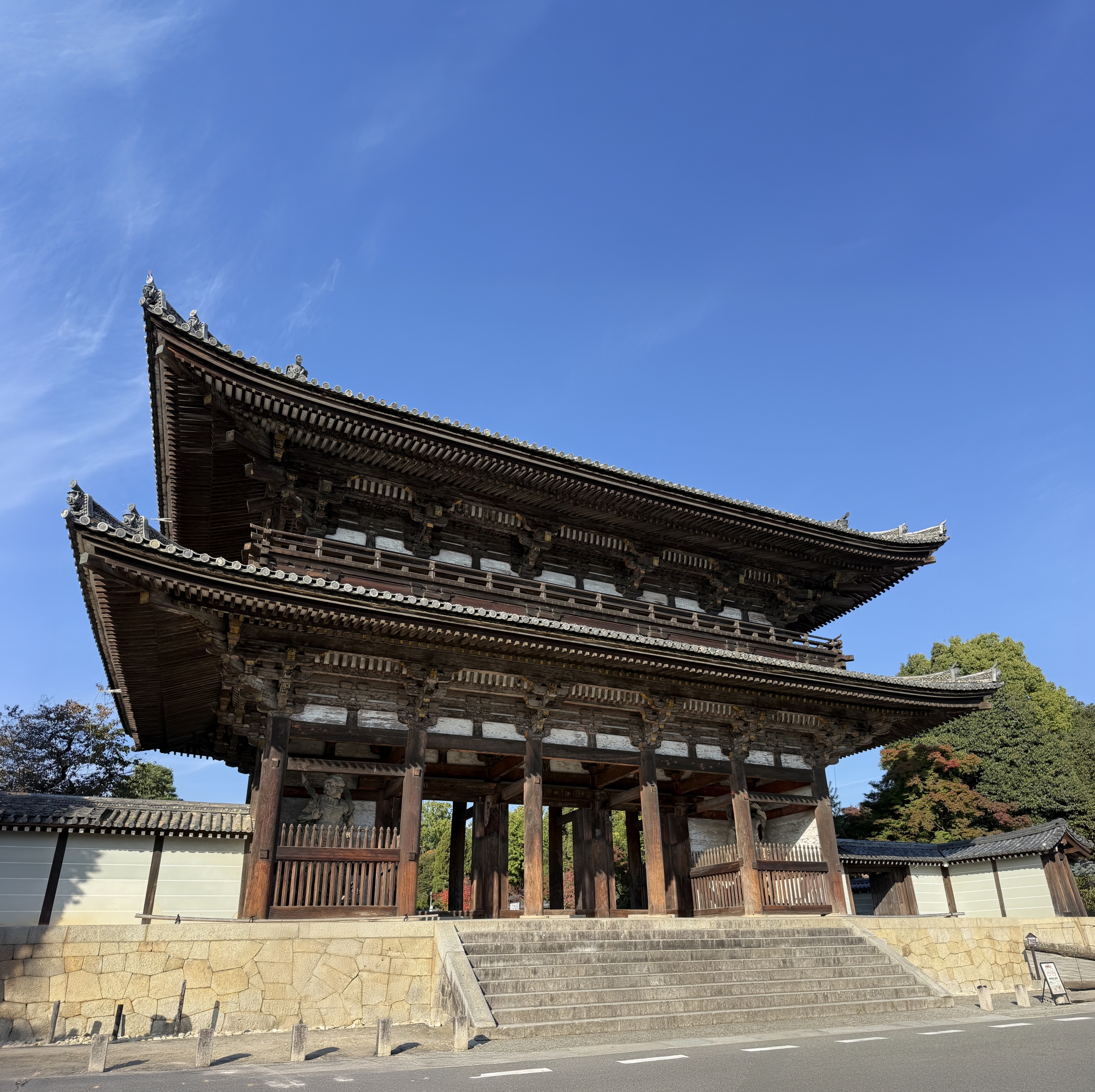
- Niomon Gate: The massive entrance gate with impressive Nio guardian statues that can be seen from Omuro-Ninnaji Station
- Kondo (Golden Hall): The main hall designated as a National Treasure, originally part of the Imperial Palace before being relocated here
- Five-Story Pagoda: A 36-meter tall pagoda that creates stunning photo opportunities, especially during cherry blossom season
- Omuro Cherry Blossoms: Late-blooming dwarf cherry trees (usually mid-April) that allow eye-level viewing—a unique experience in Japan
- Goten (Palace Garden): A paid admission area featuring stunning traditional Japanese gardens that reflect the temple’s imperial heritage
- Kannon-do Hall: Home to a thousand-armed Kannon statue, part of the temple’s sacred pilgrimage route
- Goshuin (Temple Stamp): Available at the stamp office in front of Kondo Hall—a must-collect for temple stamp enthusiasts
Honest Warnings
- Cherry Blossom Season Crowds: While generally peaceful, the temple becomes extremely crowded during the Omuro cherry blossom peak (mid-April). Early morning visits are highly recommended during this period.
- Palace Garden Fee: The main grounds are free, but the Goten (palace garden) requires a separate admission fee (¥800). However, the gardens are absolutely worth the extra cost for their breathtaking beauty.
- Large Temple Complex: The grounds are extensive—plan at least 1.5-2 hours to fully explore. Wear comfortable walking shoes.
- Limited English: While some signage is available in English, detailed explanations are primarily in Japanese. Consider hiring a guide or using an audio guide if you want deeper historical context.
- Operating Hours: Open 9:00 AM to 5:00 PM daily (last admission 4:30 PM). The temple closes promptly, so plan accordingly.
- Location: While accessible, it’s slightly further from central Kyoto. It’s best visited as part of a western Kyoto route including Kinkakuji (Golden Pavilion) and Ryoanji Temple, which are nearby.
- Photography Etiquette: Some indoor areas prohibit photography. Always respect signage and ask permission when monks are conducting ceremonies.
Pro Tip: Visit in early morning to experience the serene atmosphere with fewer tourists. If you’re visiting during cherry blossom season, the unique low-hanging Omuro cherry blossoms provide unparalleled photo opportunities against the five-story pagoda—a sight you won’t find anywhere else in Japan!
Access
Ninnaji Temple
仁和寺
33 Omuro-Ouchi, Ukyo-ku, Kyoto, 616-8092, Japan
〒616-8092 京都府京都市右京区御室大内33
TEL: 075-461-1155