
Sennyu-ji Temple: The Imperial Temple's Hidden Serenity & Beautiful Yang Guifei Kannon

 kote2
kote2 Nestled in the hills of eastern Kyoto, Sennyu-ji Temple offers something rare in this tourist-heavy city: authentic tranquility combined with deep imperial history. Known as the “Imperial Temple” (Mitera) for its close ties to the Japanese Imperial Family, this hidden gem remains blissfully uncrowded while housing treasures like the stunning Yang Guifei Kannon statue—a Buddhist image renowned for its exceptional beauty.
The Verdict
Absolutely worth visiting if you seek an authentic temple experience away from the crowds. Sennyu-ji offers a perfect blend of imperial history, architectural beauty, and peaceful atmosphere. The descending approach to the main hall provides a unique perspective rarely seen at Japanese temples. Budget at least 1-2 hours for the main temple grounds, or up to a full day if exploring all sub-temples in the complex. Note that admission fees add up (500 yen for main grounds + 500 yen for special gardens), but the serene experience justifies the cost.
Tourist Quick Check
| Payment | Cash Only (Likely) |
|---|---|
| English Support | Limited (Brochures available) |
| Reservation | Not Required |
| Wait Time | None (Rarely Crowded) |
| Wi-Fi | Unavailable |
Why Locals Love It
Sennyu-ji Temple has served as the Imperial Family’s Buddhist temple since the 13th century, earning its revered title “Mitera” (The Imperial Temple). Founded originally by Kobo Daishi (Kukai) in the Heian period, the temple was substantially rebuilt by monk Shunjo during the Kamakura era. Its profound connection to Japanese royalty is evident throughout—14 emperors and numerous imperial family members are buried in the 30 mausoleums on the grounds, including the Tsukino-wa no Misasagi imperial tomb area.
What makes this temple special is its ability to maintain a sense of sacred solitude despite being within Kyoto city limits. The moment you pass through the gate, the atmosphere transforms completely. The distinctive “descending approach” (kudari-sando) offers a rare downward view of the main Buddha Hall—an architectural feature that sets Sennyu-ji apart from most Japanese temples. The imperial chrysanthemum crest adorning various temple artifacts reminds visitors of the temple’s continuing royal patronage.
The temple is also connected to Japanese literary history through Emperor Go-Toba and poet Fujiwara no Teika, who compiled the famous Hyakunin Isshu poetry anthology. This cultural richness layers historical depth onto the already impressive spiritual atmosphere.
Key Highlights
- Yang Guifei Kannon Hall: Houses a statue of Kannon (Buddhist goddess of mercy) modeled after Yang Guifei, the legendary Chinese beauty. The statue’s serene and graceful features have captivated visitors for centuries and are considered exceptionally beautiful even among Buddhist imagery.
- Buddha Hall (Butsuden): The main hall with its imposing architecture visible from the descending approach. The heavy, dignified structure embodies the temple’s imperial heritage.
- Shariden (Relic Hall): Contains important Buddhist relics and showcases traditional temple architecture.
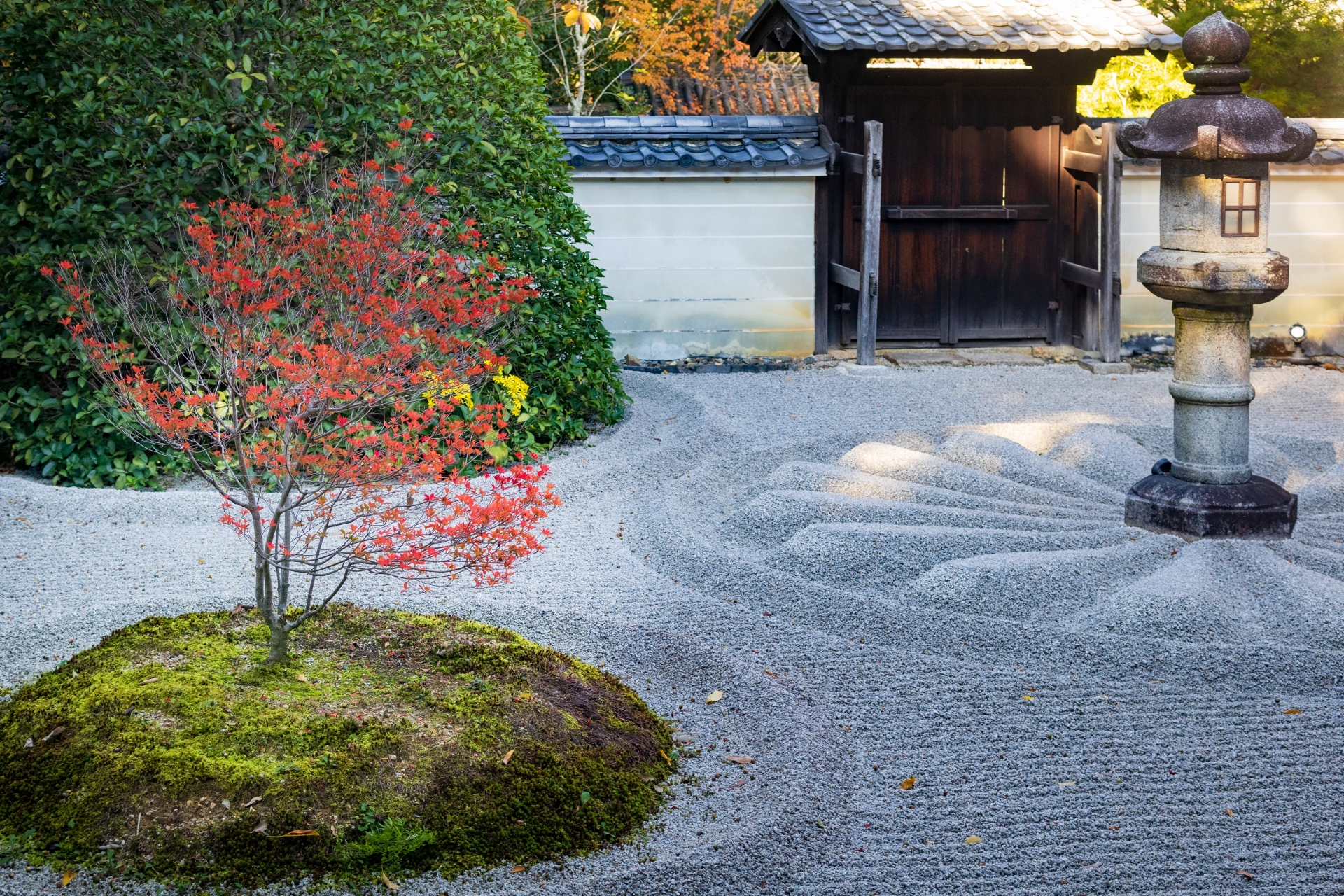
- Goza-sho Garden: A special area requiring an additional 500 yen fee, featuring traditional Japanese garden design and seasonal beauty. Particularly stunning during autumn foliage season.
- Senzan-tei Garden: Created by renowned landscape architect Shigemori Mirei in 1973, this modern garden offers a contemplative space.
- Ryokai Mandala Stained Glass: A unique fusion of Buddhist iconography and Western stained glass technique, with beautiful colored light patterns reflecting on the floor.
- Tsukino-wa no Misasagi: The imperial tomb area exudes profound solemnity and offers insight into Japan’s reverence for its imperial lineage.
- Multiple Sub-temples: The complex includes several sub-temples (tacchu) along Sennyu-ji Road, each worth exploring for those with time.
Honest Warnings
- Dual Admission Fees: Be prepared for multiple admission charges—500 yen for main temple grounds, plus another 500 yen for the Goza-sho Garden and special areas. Some visitors feel this is expensive, though the quality of experience justifies it.
- Significant Walking Required: From Tofuku-ji Station (JR/Keihan lines), it’s approximately 15 minutes to the main gate, then another 10 minutes to the main temple buildings. The area is hilly, so wear comfortable walking shoes.
- Time Commitment: If you want to explore all the sub-temples and special areas, plan for 4-6 hours. Even a basic visit requires 1-2 hours minimum.
- Limited English Information: While the temple is historically significant, English explanations are minimal. Consider bringing a guidebook or doing research beforehand.
- Early Closure: The temple closes at 4:30 PM daily, so arrive with enough time—last admission is likely around 4:00 PM.
- Best Seasons: While beautiful year-round, autumn foliage and early summer greenery are particularly spectacular. However, even “crowded” times at Sennyu-ji are relatively peaceful compared to famous Kyoto temples.
- No Wi-Fi Available: Download maps and information before visiting, as internet connectivity may be limited.
Sennyu-ji Temple represents the best of what Kyoto offers discerning travelers: profound history, architectural beauty, cultural significance, and most importantly, the space and silence to actually absorb it all. This is where you’ll find the Kyoto that exists beyond the Instagram crowds.
Access
Sennyu-ji Temple
泉涌寺
27 Sennyuji Yamauchi-cho, Higashiyama-ku, Kyoto, 605-0977, Japan
〒605-0977 京都府京都市東山区泉涌寺山内町27
TEL: 075-561-1551